
Red Teaming the Mind (RTTM) is a teaching framework for investigating complex
systems—technical or human—without panic, exploitation, or self-deception.
This is not advice, diagnosis, or instruction. It is a documented way of
thinking: how to observe, test, and learn when systems behave unexpectedly.
git init rttm
commit --message="initialize framework"
0. Objective — Input / Encode
Where you’re starting.
- What system, process, or behavior are you examining?
- What signal, anomaly, or artifact caught your attention?
- What is your initial intuition—even if incomplete?
The objective defines scope, not truth. It is a starting coordinate, not a conclusion.
return objective.initial_state
1. Parameters — Output / Decode
What you’re trying to understand.
- What is the expected baseline behavior?
- What changed?
- What is your working hypothesis?
Boundaries:
- In-scope: safe, permitted, observable systems
- Out-of-scope: destructive, private, or irreversible actions
commit parameters --message="scope defined"
2. Test Plan — Signal vs. Noise
How you will interact with the system.
- What variables will change?
- What will remain constant?
- What will be measured?
- What is signal vs. noise?
Rule #1: Document everything. Failed runs are data, not embarrassment.
deploy testbed --isolated
3. Runs — Artifact / Effect
Each run is logged as change → response → insight, timestamped, without hindsight edits.
Write as if future-you is a hostile reviewer.
log run[n] --timestamped
4. Findings — Boundary Map
Map where effects propagated, where they faded, and where coupling surprised you. This becomes a live topology of the system.
map system.boundaries
5. Ethics — The Human Layer
- What ethical limits were set?
- What paths were avoided, and why?
- What trade-offs required judgment?
Don’t justify. Reflect.
check ethics --continuous
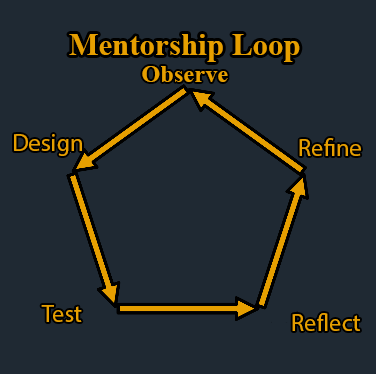
The Learning Loop
RTTM is not a checklist. It is a loop. Understanding compounds through repeated cycles of documentation, observation, testing, reflection, and refinement.
Each pass through the loop reduces uncertainty. The goal is not speed—it is coherence.
The Innovation Lens
Not every insight should become an intervention. This lens helps evaluate whether an idea is worth pursuing.
- Novel: Is it genuinely new?
- Useful: Does it help someone or something?
- Viable: Can it realistically work?
- Feasible: Do you have the resources to pursue it?
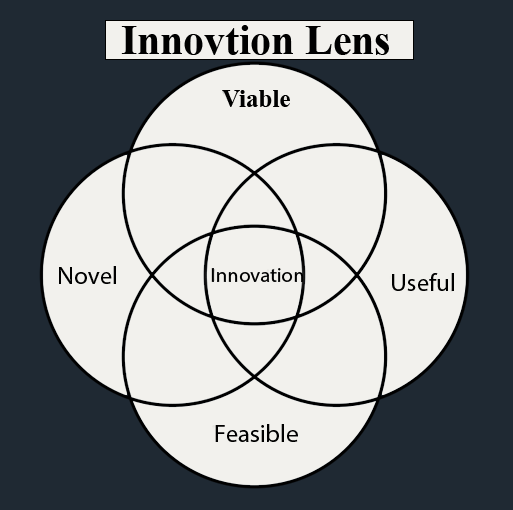
Ethics live at the center—not as an afterthought, but as a constraint that makes systems sustainable.
Why This Matters
Every field eventually encounters the same problem: reality doesn’t behave as expected. Systemic thinking provides a way forward that isn’t panic, force, or denial.
This framework is not about technology. It is about how to think when you don’t know what to do next.
git commit insight --message="model stabilized"